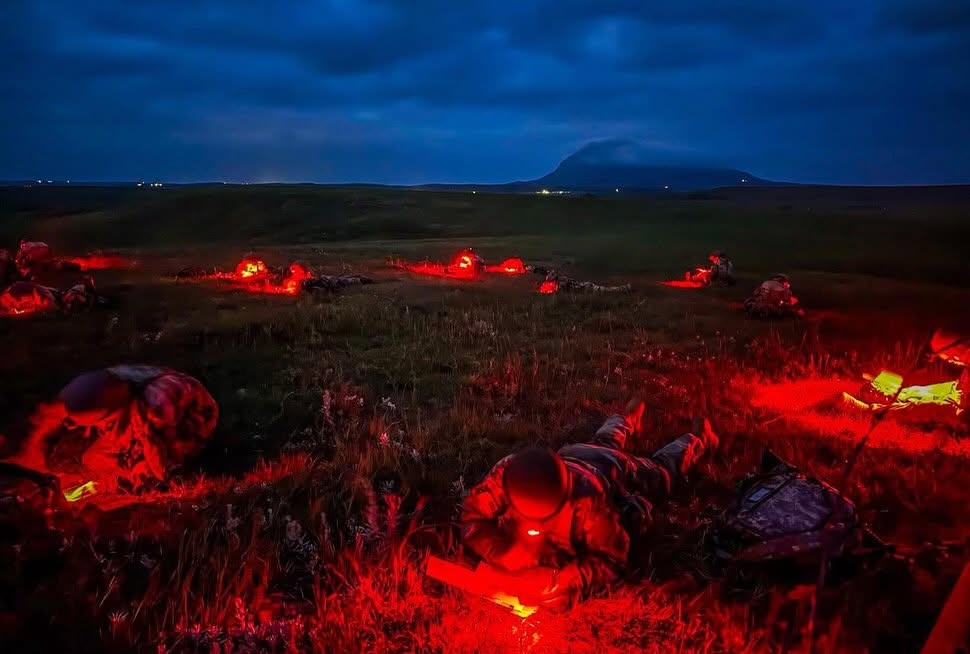


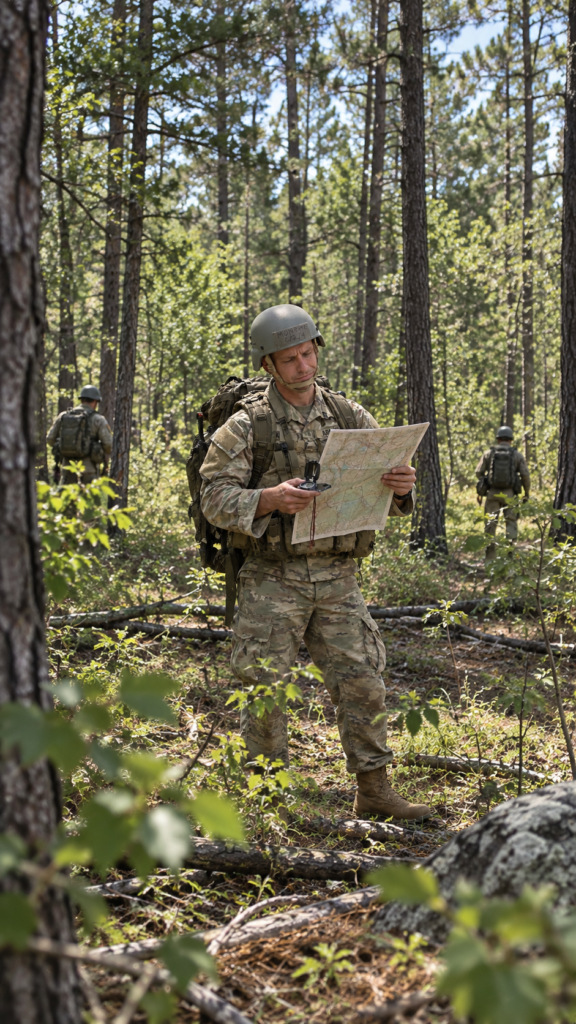
I’ve learned a lot from my time in the Army, but land nav is one of my favorites. Anyone who has been in the knows the Army loves land nav. Pretty much every leadership or specialized school has some segment dedicated to it. When I became a Right of Way Agent, I never expected this perishable Army skill to become something I could apply to my Monday–Friday career. But the more I work in ROW, the more similarities I see.
Planning
In land nav, you get your grids, plot your points, identify the best route, and build a plan to complete the mission—usually with a very tight deadline.
ROW is surprisingly similar. Once I receive my acquisitions, I assess which ones should be straightforward and which ones are likely to require more time, negotiation, or problem-solving. Then I prioritize and build my route accordingly.
The map isn’t the terrain
In land nav, you can study the topo lines, identify ridgelines, rivers, roads, and other terrain features, and develop a pretty good picture of what you’re about to encounter.
But you don’t really know until your boots are in the mud. I can’t tell you how many times I’ve been walking an azimuth expecting a straight shot, only to run into thick, nearly impassable vegetation that wasn’t obvious on the map. So you adjust your route and CM—”Charlie Mike”: continue mission. ROW is no different. The construction plans can look perfect. GIS and Google Earth can make a project seem simple. The land rights can look straightforward. Then you do a site walk, meet the property owner, uncover an old deed, or discover a county right of way—and suddenly you’re looking at a completely different terrain. And then there are the obstacles. In land nav, you inevitably encounter something you didn’t plan for. A marsh. A steep hillside. Thick vegetation. Or, worst of all, you reach your point only to find it isn’t there.
What do you do?
You problem solve: you check your map, recheck your azimuth and distance, or find another route. You figure it out. ROW is no different. Could be unknown owners, properties in probate, requests to relocate equipment or a property owner who won’t work with you. You figure it out: different route, different negotiation strategy, different solution. The objective doesn’t change. Sometimes the route does. I’ve learned a lot from the Army, and I never expected land navigation to have much relevance to my professional career. But it has.
So, if you see me out there with a compass and protractor, don’t be surprised. Just don’t interrupt my pace count.
-Isaac Monroe